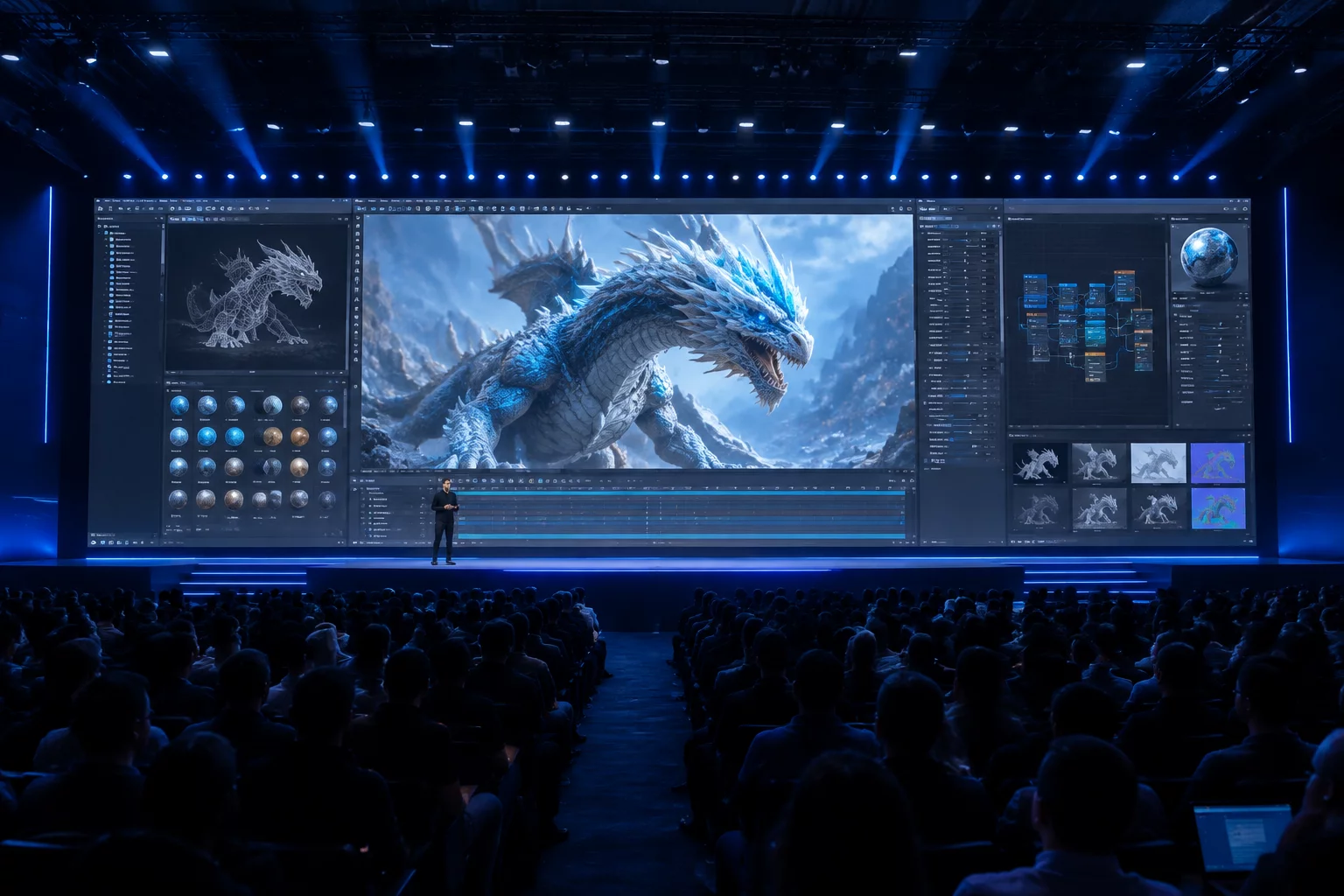
Autodesk revealed major advancements in procedural geometry engines, deep USD pipeline integration, and automated mesh optimization toolsets during their keynote presentation at SIGGRAPH 2026. These updates focus on accelerating asset delivery across engineering and digital entertainment ecosystems.
Parametric Precision and Advanced Geometric Systems
At SIGGRAPH 2026, the spotlight centered on unifying parametric engineering models with real-time digital asset production. The newly unveiled toolset introduces procedural mesh generation algorithms that dynamically adapt topology depending on the downstream viewport resolution or manufacturing precision requirements.
Digital artists and CAD engineers frequently struggle with disconnected geometry formats. With native OpenUSD integration directly inside core authoring workflows, design teams can synchronize mechanical components, material definitions, and animation rigs without intermediate translation losses.
Key Announcements and Technological Innovations
- Real-time procedural node graphs that recalculate boundary representations on parallel GPU threads.
- Unified OpenUSD schema support facilitating effortless handoffs between engineering CAD and visual effects pipelines.
- Automated topology decimation routines that preserve critical mechanical edge tolerances and curvature continuous surfaces.
- Cloud-distributed simulation engines capable of evaluating stress fields and kinematics within browser-based canvas environments.
Implications for Modern Digital Design Pipelines
For studios and engineering firms alike, these releases represent a decisive transition away from monolithic file structures. By leveraging asynchronous geometric calculations and browser-compliant rendering standards, distributed teams achieve synchronized model verification across multiple physical locations without version friction.